Quality honey: criteria to note
- Posted on 21/08/2023 10:41
- Film
- By abelozih@sante-education.tg
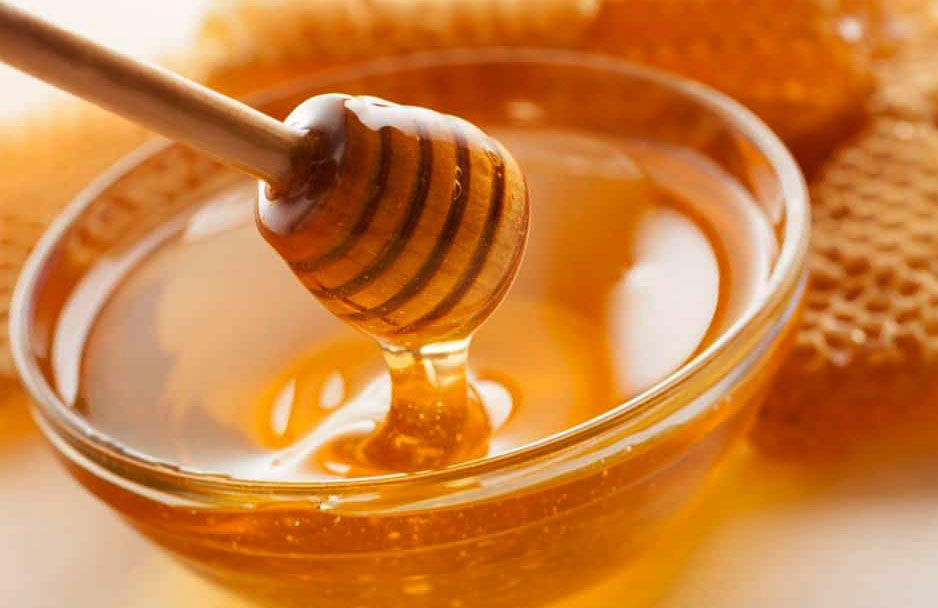
Extract from the article: Honey is a unique food product with health benefits for consumers. But the big challenge is to find, buy and consume good quality honey. Because of its chemical composition, honey cannot be synthesized industrially. However, there is adulterated or p
Honey
is a unique food product with health benefits for consumers. But the big
challenge is to find, buy and consume good quality honey. Because of its
chemical composition, honey cannot be synthesized industrially. However, there
is adulterated or poor-quality honey on the market. The question then arises:
"How can I recognize or identify a quality honey? Here are a few criteria
for recognizing a quality honey that is suitable for consumption.
Honey
quality requirements correspond to those of the European Union and are defined
by law. According to the Codex Alimentarius, the food standards body of the FAO
and WHO, honey is a natural sweet substance produced by honeybees (Apis
mellifera) from plant nectars or secretions of living plant parts and insect excretions.
These bees suck the sap from living plant parts, collecting them and modifying
them by adding their own specific substances.
Chemical
composition of honey
The
chemical composition of honey depends largely on its floral or botanical
origin. The most common ingredients in honey are carbohydrates (73 to 83%),
with total reducing sugars (fructose + glucose) predominating. Substances such
as organic acids, enzymes and solid particles penetrate honey during its
formation.
Recognizing
quality honey
According
to Dr. Koudegnan Comlan, Research Lecturer at the Laboratoire de Recherche
Forestière (LRF) at the University of Lomé, a quality honey is « a
honey that is harvested at maturity in sealed cells or combs: it is dry,
concentrated and rich in enzymes. It is neither adulterated nor fermented ».
The quality of honey is determined by a number of physico-chemical criteria or
parameters. « A quality natural honey must be extracted according to
certain rules. You need to be sure that your honey has not been heated or
pasteurized. If these precautions are not taken into account, honey loses its
virtues. It must be freshly harvested, well filtered, decanted and with a
moisture content generally below 18%, with a margin of up to 21% according to
some authors ».
To
assess the quality of a honey, several scientific tests or analyses can be
carried out, emphasizes the teacher-researcher. « The quality
parameters studied in laboratories are of various kinds.In the forestry
research laboratory, we often study water content, sugar content and
concentration, Brix degree, pH, electrical conductivity, density, pollen count
and pollen taxa.In addition to these tests, there are other tests, known as
physical, traditional and ecological tests, which can be carried out directly
in the field ». The origin and quality of honey can be verified and
assessed on three aspects: phytosanitary (in the laboratory), ecological and
physical, which are closely linked and dependent on the chemical composition of
the honey. During the best honey competition organized in the central region by
VSF-Switzerland's MiKaGo project, these three aspects of quality were taken
into account, proving that the honey samples from all the cooperatives taking
part in the competition were of good quality.
Analysis
of these three factors involved firstly assessing biochemical parameters in the
laboratory (LRF/UL), including water content, sugar content, Brix level and
density. Next, physical tests were carried out on the dissolution of honey in
water, the mixing of honey with fine sand and the ignition of a stick
impregnated with honey. The third criterion, ecological, looked at factors such
as the location of apiaries, distance from nearby villages and agricultural
plots, and the types of crops present. Other elements, such as the use of
harvesting equipment and the actions taken by cooperatives to protect bees and
the environment, were also taken into consideration.
All
the results obtained reassure us that the honey produced in the Central Region
by the cooperatives is a honey with no added sugar, a natural honey that is
harvested wall-to-wall after capping, using a modern harvesting method. It is
therefore a honey of acceptable quality for consumption.
Tips
for consumers on choosing quality honey
Dr
Koudegnan Comlan affirms that it is advisable to give preference to honey with
a precise origin (beekeeper's address on the packaging) and sold in reliable
outlets such as specialist stores. At best, buy directly from beekeepers in the
central region whose honeys have been tested and found to be of good quality.
William
O.
To
purchase from these beekeepers, please contact:
+228
90 34 44 67/ 91 75 15 54/ 92 69 30 08