«Bonjour Bébé» for free at-home monitoring of women in labour and their newborn babies
- Posted on 01/08/2023 15:54
- Film
- By abelozih@sante-education.tg

Extract from the article: Once back at home, the woman who has given birth may feel the need to be accompanied. If necessary, she can benefit from post-natal follow-up sessions with a midwife. These sessions provide an opportunity to discuss difficulties and questions about b
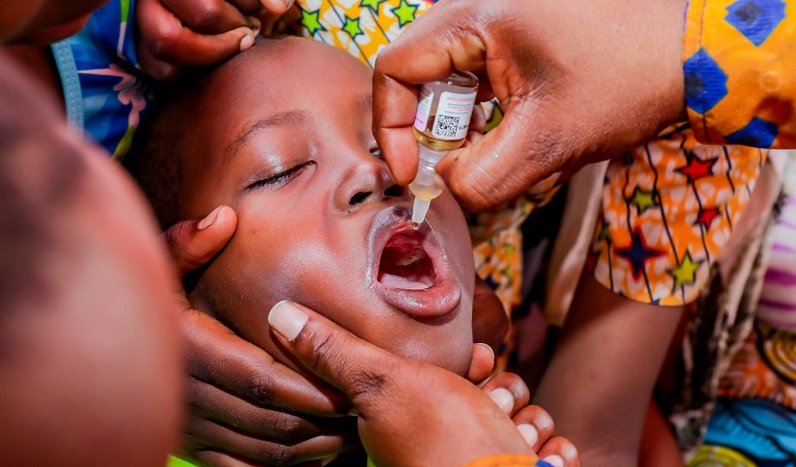
Once back at home, the woman who has given birth may feel the need to be accompanied. If necessary, she can benefit from post-natal follow-up sessions with a midwife. These sessions provide an opportunity to discuss difficulties and questions about breastfeeding and caring for the baby. This is one of the aims of the "Bonjour Bébé" project, which has been run by the Pouponnière Sainte Claire since October 2015. This is thanks to the expertise of the state midwives who visit pregnant women, women who have given birth and their babies at home. In order to provide better care for mothers and their babies, and to make the project's activities more visible, a delegation led by Marie-Jo Trenou, President of the Agir ensemble pour l'Afrique (AEA) foundation, visited the project's beneficiaries in the Agoè-Cacaveli and Djidjolé areas on Monday 31 July to get a first-hand look at the realities experienced by the project's midwives on a daily basis. The delegation saw for themselves the realities of home monitoring of three mothers who had given birth. The monitoring assessed the state of health of the mothers and their newborn babies, and responded to the needs and questions of the beneficiaries.
Infant
and neonatal mortality rates are still high.The aim of the « Bonjour bébé »
project is to provide support to pregnant women in need, from pregnancy to
childbirth, and up to two years after childbirth.
The
delegation visited three project sites, including two (02) homes in Agoè
Cacaveli and the «Les petits anges » clinic in Djidjolé.The visit gave all
those involved an opportunity to get a close-up view of the day-to-day
realities faced by the project's midwives.Whether it's the vulnerability of the
families being cared for, or the stunted growth of children due to neglect, the
'Bonjour Bébé' project has the wind in its sails to win a vast, complex and
important humanitarian and social project.
During
the home visit, the state-qualified midwives monitored the mother and babies
and carried out a compulsory postnatal interview aimed at preventing
post-partum depression.This post-natal medical consultation provided an
opportunity to take stock of the mother's state of health after childbirth.All
these services were accompanied by training in good manners and practices for
keeping homes and the environment clean.
Monitoring
women who have given birth and suffered complications during pregnancy
Mathilde
Djikpo, an 18-year-old hairdresser in the Agoè-Cacaveli area, gave birth to a
1-month-old daughter, Ciara Dzidula. During the birth, she suffered a
complication known as a delivery haemorrhage, characterised by a tearing of the
cervix. She lost a lot of blood.After three weeks of intensive care at the CHU
Sylvanus Olympio, Mathilde finally returned home, but under the supervision of
Nadège Awesso, the project's midwife. She follows Mathilde twice a week, not
counting telephone contacts.Thanks to this support, Mathilde is now doing
better. « I'm doing well. My health has improved since the « Bonjour
Bébé » midwife came to monitor me. She comes to weigh the baby, take my
blood pressure, my temperature and that of my baby. There's been a marked
improvement since then. She gives me more health advice, especially about
hygiene and diet. I'd like to thank the project and all its partners »,
said Mathilde Djikpo.
During
their interview, Nadège Awesso focuses on baby hygiene and in particular on the
dietary practices to adopt. « For her health, a young mother needs to
eat cereals and vegetables.She should favour leafy sauces, aloma and
gboma. She should always vary her diet
and also eat fruit.In sauces, she should give preference to fish and lean
meat.In her condition, Mathilde should opt for beetroot.It's an anti-anaemic
vegetable », explains Nadège Awesso.
Supporting
malnourished babies
According
to the WHO, malnutrition is defined as deficiencies, excesses or imbalances in
a person's energy and/or nutritional intake.It is a nutritional state resulting
from a diet that is unbalanced in terms of quantity and/or quality. The midwives from « Bonjour Bébé »
have encountered a number of difficulties in supporting the beneficiaries of
the project.This is particularly the case for Séna Akossiwa, a 22-year-old
housewife and mother of a 2-month-old baby, who is mentally handicapped and
lives with her aunt in Agoè-Cacaveli. When « Bonjour bébé » began her
home visit, she noticed that her baby was suffering from acute malnutrition.
To
avoid complications, « Bonjour bébé » provided the family with
anti-anemic drugs and milk to cover the child's energy needs. After a while,
the midwife noticed that the child's weight was more or less improving. « Today,
the baby is 2 months old. But the child is acutely malnourished.They were sent
to the paediatrician for a consultation.The child is being given mixed
breastfeeding.The problem is that the mother can't follow the advice we give
her. As a result, the child's progress is more or less moderate. Similarly, his
guardian is not very receptive to the advice we give them. We're still
following up and raising awareness », explained Pierrette Aziamathé,
the midwife in charge of Mrs Séna's care.
Managing
severe undernutrition in babies
Undernutrition
is the result of a nutritional intake that is too low in relation to the body's
needs.The most obvious symptom is weight loss.A weight loss of 5% in one month
or 10% in six months should be a warning sign, as should thinness with a body
mass index (BMI) below the norm.Undernutrition causes weight loss, stunted
growth and underweight.This is the case of Gilles, a 6-month-old baby suffering
from severe malnutrition, admitted to the « Les petits anges » clinic
in Djidjolé. The baby, who weighs just 2 kg, is on oxygen and very thin.
For
midwife Justine Didassa, « this is a disturbing and shocking case.Baby
Gilles suffers from a persistent imbalance between nutritional needs and
intake.His growth is worrying. « Bonjour bébé » continues to
accompany and support baby Gilles. Strategies are being put in place to save
this baby and restore his health ».
Renewed
commitment from partners
The
partners who accompanied the delegation, such as Fondation Agir Ensemble pour
l'Afrique, TdE and ANTASER-Togo, have renewed their support for the project in
order to better deal with these cases and bring comfort to the beneficiaries.
Over
the past 10 years, the project has gone through three phases with significant
results and impact.More than 37,320 home visits have been made, with 4,570
women and 3,864 children being monitored.
William
O.