Gout and kidneys: beware of kidney failure
- Posted on 30/06/2023 15:28
- Film
- By abelozih@sante-education.tg
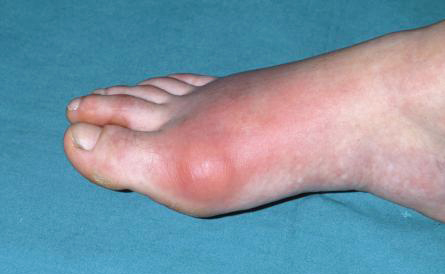
Extract from the article: Gout is an inflammatory arthritis secondary to crystalline deposits of monosodium urate or uric acid. Uric acid is the end product of the breakdown of certain molecules in the body, in particular purines. Uric acid levels are maintained at a maximum
Gout
is an inflammatory arthritis secondary to crystalline deposits of monosodium
urate or uric acid. Uric acid is the end product of the breakdown of certain
molecules in the body, in particular purines. Uric acid levels are maintained
at a maximum threshold, beyond which hyperuricaemia occurs. If this
hyperuricaemia causes arthritis, the condition is known as gout. The kidney is
the main organ for regulating the quantity of water and electrolytes and
eliminating toxic substances. As part of their function, the kidneys eliminate
2/3 of uric acid. Can gout affect the kidneys as it progresses?
Gout,
as it progresses, can cause renal failure by two main mechanisms: firstly, the
precipitation of urate crystals within the parenchyma or renal tubules.This
causes inflammation and even fibrosis, leading to renal failure.This is
followed by the formation of lithiasis or stones based on urate crystals.These
stones can then obstruct the urinary excretory tract, preventing the normal
flow of urine and causing kidney failure.
In
addition to these two mechanisms, certain drugs used to treat the pain caused
by gout, in this case anti-inflammatory drugs, can also lead to kidney failure.
What
happens when the kidneys are affected?
In
the case of kidney failure, uric acid is not eliminated and increases in the
blood. This causes or aggravates gout.In addition, certain drugs used in renal
failure, particularly diuretics, can also cause hyperuricaemia.So the
relationship between gout and the kidneys is a two-way street.Gout can cause
renal failure and vice versa.What can be done in this situation?Treating
patients requires multidisciplinary monitoring. They can be treated in
collaboration with rheumatologists. In these situations, if the renal
insufficiency is moderate, dietary hygiene measures are recommended. Molecules
are used to reduce uric acid levels and soothe pain while protecting the
kidneys.
But
in the case of end-stage renal failure, dialysis or renal translation is
indicated.
Advice
for the general public
Eat
a healthy, balanced diet, cut down on red meat consumption, cut down on
excessive consumption of alcoholic beverages, drink at least 2.5 litres of
water a day and exercise daily. Consult a doctor at least once a year, even if
everything is going well, and avoid self-medication.
Elom
AKAKPO
Source:
Dr Pegdebamba François Kissou, Nephrologist at the Sourou Sanou University
Hospital in Burkina Faso