

Screens and smartphones: enemies of sleep
- Posted on 14/06/2023 10:54
- Film
- By raymonddzakpata@sante-education.tg
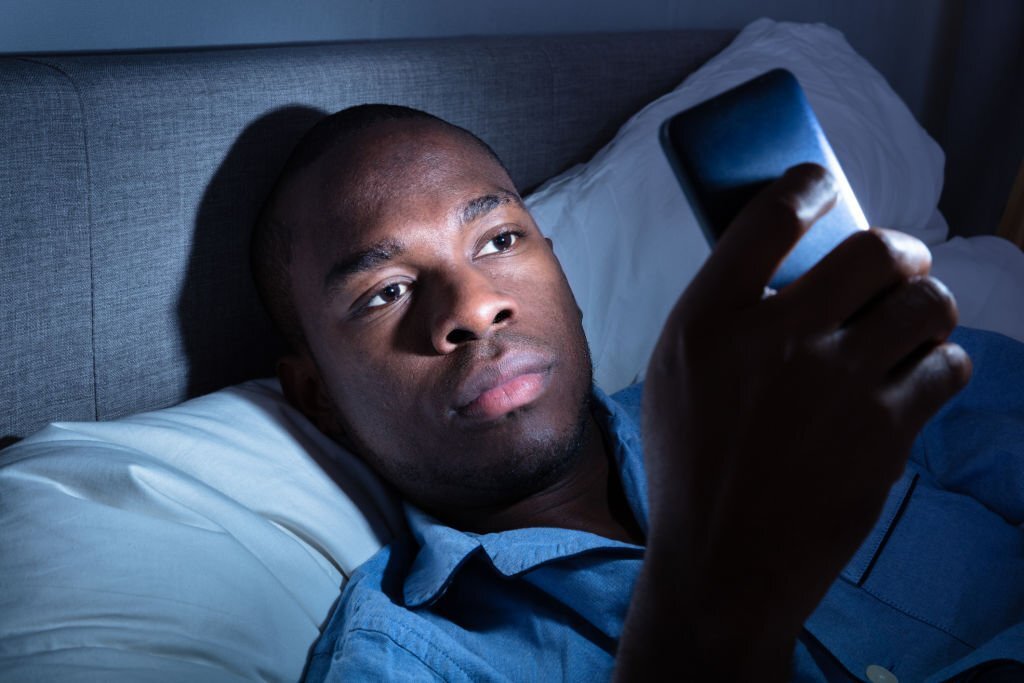
Extract from the article: Sleep plays a key role in the body. It enables the immune system to regenerate, notably through the secretion of hormones (prolactin, dopamine, etc.). It is also involved in the memory process. It is during sleep that the growth hormone, so ...
Sleep
plays a key role in the body. It enables the immune system to regenerate,
notably through the secretion of hormones (prolactin, dopamine, etc.). It is
also involved in the memory process. It is during sleep that the growth
hormone, so important for children, is released, as well as many other hormones
that regulate metabolism, emotions, etc. Today, the use of tablets, computers
and smartphones is having an impact on our restful sleep. These tools emit more
than enough light to disrupt our biological clock, our sleep and ultimately our
health. This artificial light to which we are exposed at night inhibits the
neurons that activate sleep and excites other neuronal centres that play a role
in wakefulness. As a result, falling asleep is difficult and delayed. Here's
how the light intensity of laptops and computers can induce sleep disorders.
These
new technologies use LED screens, which emit a spectrum of light known as
"blue light". The blue light emitted by screens, which activates the
retina's non-visual photosensitive receptors (ganglion cells) a hundred times
more than the white light of a lamp, promotes wakefulness. It has a direct
impact on the brain centre that controls our biological clock, located in the
pituitary gland. Melatonin, the sleep hormone, may not be released if used
excessively, risking a delay in falling asleep.
Better quality sleep
At what time should I stop using my mobile
phone or computer and turn off the television to get a better night's sleep? We
recommend that you switch everything off two hours before going to bed. We also
know that in the second half of the afternoon, after 5pm, the biological clock
for most people is more sensitive to screen light.
The current state of
excessive use of screens
More
than a billion people in Africa look at a mobile phone every day. Mobile
devices are such an integral part of daily life that a third of users say they
even glance at their phone every 5 minutes or so. More than half of users also
say they check their mobile just before going to bed in Kenya (53%), South
Africa (53%), Uganda (54%) and Zimbabwe (56%), even though several studies have
revealed that this is not very good for sleep quality. In Togo, around 4 out of
10 people use a computer, tablet or laptop in bed at night. Some don't switch
them off at night, when most of them are consulting them. Today's hyper-connected
Togolese society is no longer capable of letting go and avoiding the constant
and excessive stimulation that is so harmful to the proper balance of our brain
function.
What are the consequences
of sleeping too little?
People
who are sleep-deprived are constantly tired, have memory problems and suffer
from anxiety and depressive disorders. Their reduced alertness can lead to
accidents both on the road and in the workplace. Sleep deprivation leads to a
deterioration in the immune system, making people vulnerable to infection.
Blue light is particularly
harmful to children
Children
are more sensitive to blue light because it has a greater impact on their
biological clock. That's why specialists have drawn up rules: no mobile phone
or computer screens before the age of 3 or 4, and no more than 30 minutes a day
between the ages of 4 and 6, and one hour between the ages of 6 and 9.
Parents
and educators need to adapt to new technologies in order to stay in step with
young people and engage in dialogue. According to some parents, many reactions
to young people risk being inappropriate, marked by indifferent or resigned
laissez-faire, or thoughtless enthusiasm, or profound incomprehension. Talking
about screens and building trust are the best ways to help children understand
the advantages and disadvantages.
Are there screens that are
less harmful to the biological clock?
It's
not a question of specific devices, but of the intensity of the light,
especially blue light, which has a greater or lesser effect on sleep, which is
why we need to be careful to adjust the intensity of the light on our devices.
From 50 lux upwards, it has an impact on the quality of our nights.
How much sleep do we need
to be in good health?
There
are big sleepers and small sleepers, but while needs vary from one individual
to another, they do diminish over the course of a lifetime. They are not the
same at 20, 40 or 70. Some people are at their best with six hours' sleep,
while others need nine or ten hours. Because of the new pace of life, most
Togolese sleep less than six hours, and many others have a poorer quality of
sleep.
Abel
OZIH
