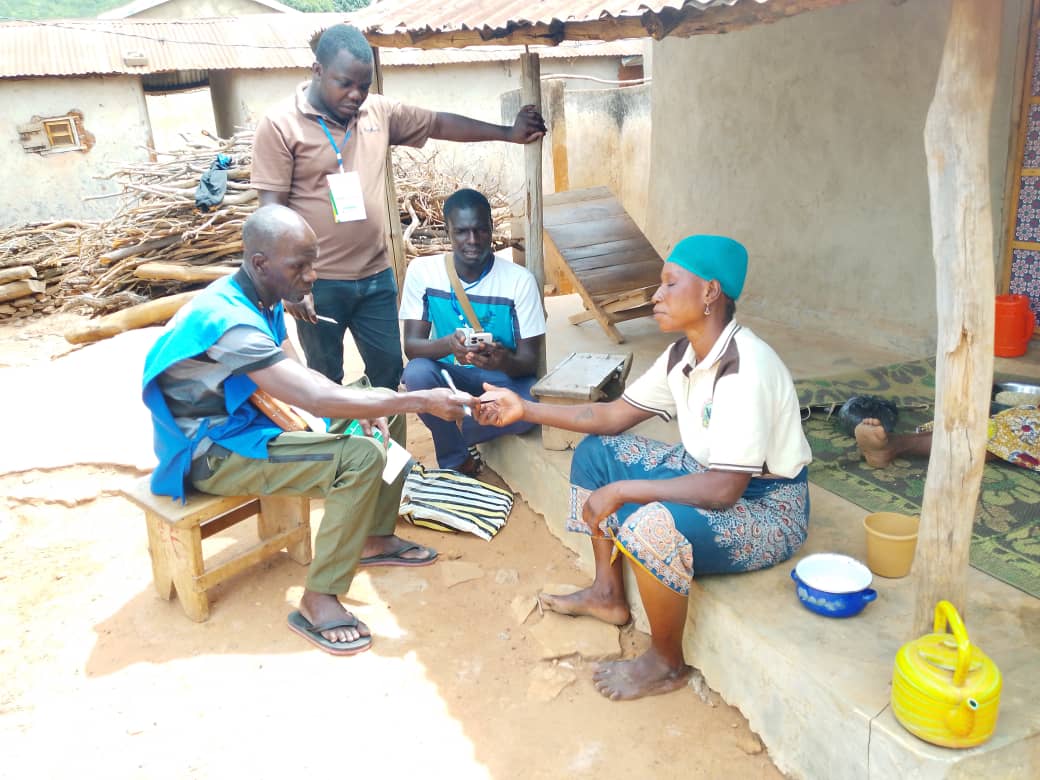
Interview with Dr. Komlavi Gonçalves, General Practitioner, on diarrhea in children
- Posted on 09/07/2021 00:00
- Film
- By stephaneogou@gmail.com

Extract from the article: Diarrhea is a common problem in children. However, this does not mean it should be trivialized. It causes severe dehydration, which can be very dangerous. Thousands of children under the age of 5 are hospitalized each year in Togo for cases of diarr
« Diarrhea
in children can be dangerous. We must take it seriously. If we don't act
quickly, it can be disastrous for the child. »
Diarrhea is a common problem in children. However, this does not mean it should be trivialized. It causes severe dehydration, which can be very dangerous. Thousands of children under the age of 5 are hospitalized each year in Togo for cases of diarrhea, and some die. What are the causes? How should you respond when your child has it? Dr. Komlavi Gonçalves, a general practitioner, provides some clarification.
Health Education: What is
diarrhea?
Dr. Komlavi Gonçalves: We
talk about diarrhea when stools are more liquid and more frequent than usual.
Normally, our stools should have a certain consistency, so when they become
very liquid, we talk about diarrhea. But a single liquid stool is not enough to
be considered diarrhea; there must be a certain frequency. An infant or child
may normally have two liquid stools a day. However, if they have more than
three loose or liquid stools a day, this is considered acute diarrhea. This is
a bad sign.
What are the symptoms of
diarrhea in children?
In
most cases, the symptoms are caused by a virus (mainly rotavirus in children
under 5 years of age). Diarrhea is often accompanied by fever, bloating,
vomiting, and abdominal cramps. It can also manifest as foul-smelling,
mucus-streaked, and very watery stools, as well as weight loss.
What causes diarrhea?
The
causes of diarrhea in children can be related to poor diet or food allergies.
Too many sugary foods, candy, chocolate, cookies. A child who is allergic to
milk and consumes this food may experience diarrhea. It can also be caused by
food poisoning: poorly prepared baby bottles, for example, or consumption of
unsafe water.
Diarrhea
in children can be the result of an ENT infection (ear infection, tonsillitis,
rhinitis) or a respiratory infection (bronchitis, pneumonia). Most of the time,
diarrhea is caused by an intestinal infection of viral, bacterial, or parasitic
origin.
What are the complications
of diarrhea in children?
When
a child has diarrhea, they lose water and minerals. If this is not compensated
for, it will cause an imbalance in the body, leading to a serious complication
called dehydration. Children have more than 90% water in their bodies. A
dehydrated child may develop a fever.
This loss of water and minerals can very quickly have a significant
impact. Signs include shock, impaired consciousness, paleness and dark circles
under the eyes, rapid breathing, and blood in the stool. If this condition is
not corrected quickly, the child may fall into a coma or die.
Is diarrhea contagious?
Diarrhea
is highly contagious, whether it is viral, bacterial, or parasitic. Contagion
is linked to food. Basic hygiene rules are therefore essential to prevent
contamination and poisoning. Hand washing is essential when preparing meals,
before eating or feeding your child, as they are very fragile and have
diarrhea. Particular attention should be paid to cleaning surfaces that the
child touches.
When should you see a
doctor?
Diarrhea
can sometimes be beneficial because it clears out the system. The child feels
lighter. However, if the child has watery or very loose stools more frequently
than normal for more than two or three days, accompanied by fever and fatigue
for more than 24 hours, you should seek medical advice. You should also take
them to the hospital if they refuse to drink and have been vomiting everything
they swallow for more than 24 hours, if they are bloated with a swollen, hard,
and painful stomach, and if there is blood in their stools.
How should diarrhea in
children be treated?
Normally,
rapid rehydration with fluids and a return to normal eating should help to
overcome acute diarrhea. If the child is unable to drink directly, intravenous
fluids are administered to replace what they have lost through diarrhea.
However, if this is not enough, the doctor may prescribe appropriate
medication. In all cases, these medications must be administered in addition to
oral rehydration.
How should diarrhea in
children be treated?
Normally,
rapid rehydration with solutions and a return to normal eating should be enough
to overcome acute diarrhea. If the child is unable to drink directly, IV fluids
are administered to replace everything lost through diarrhea. However, if this
is not enough, the doctor may prescribe appropriate medication. In all cases,
these medications must be administered in addition to oral rehydration.
What
should you do when a child has diarrhea?
A
child with diarrhea should be given drinking water to compensate for fluid
loss, and in practice, rice water should be given. Also give them an oral
rehydration solution (ORS), regardless of their age. This powder, which is
mixed with water, is specially designed to prevent dehydration. It is available
at pharmacies.
Can diarrhea be prevented?
Yes.
First, you need to pay attention to your child's diet. Any changes to their diet
should be made gradually, not suddenly. This is especially important when
weaning your child, so that they can adapt to and tolerate the new food you are
offering them. From an infectious disease perspective, you need to be careful
about everything you give your child to eat, and make sure you store or cover
food properly. You should also be careful when buying food from roadside
vendors, as hygiene standards are not always high. There is a high risk because
these foods can promote infections. There are also vaccines that can prevent
viral diarrhea in infants and children. In addition to food hygiene, personal
hygiene is also important. The child's environment must be clean, and the child
must be washed thoroughly, along with their clothes and everything they use.
Children tend to put everything they find in their mouths. Watch for changes in
your child's behavior, and if you see that they are developing diarrhea, react
quickly before complications arise.
Your advice to parents
Diarrhea
can be dangerous. If not treated quickly, it can be disastrous for the child.
Diarrhea is serious and must be taken seriously. Parents must pay attention to
their child's diet, the composition of their food, and its cleanliness. A child
with diarrhea must have a good diet. With an appropriate diet, your child's
bowel movements should return to normal within a few days. Keep an eye on your
child until the diarrhea has completely stopped. If they develop a fever, the
signs of diarrhea do not improve, their behavior changes, or they show signs of
dehydration, consult your doctor again.
Interview by Abel OZIH