Cervical cancer: a silent but preventable disease
- Posted on 15/05/2026 11:56
- Film
- By abelozih@sante-education.tg
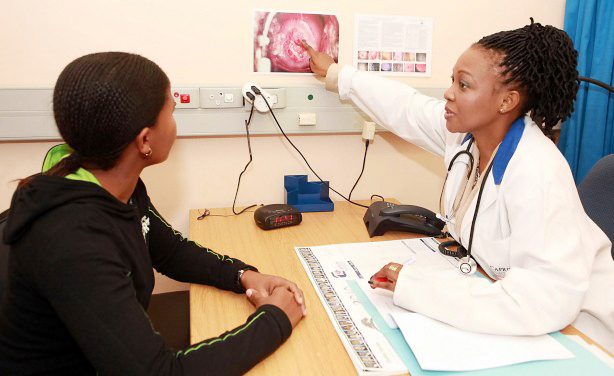
Extract from the article: Every year, thousands of women are affected by cervical cancer, a preventable and curable disease when detected in time. Long silent, this cancer develops gradually, often as a result of persistent infection by the human papillomavirus (HPV), a sexua
Every
year, thousands of women are affected by cervical cancer, a preventable and
curable disease when detected in time. Long silent, this cancer develops
gradually, often as a result of persistent infection by the human
papillomavirus (HPV), a sexually transmitted virus. Despite medical advances,
screening is still insufficient, especially in Africa, where many women consult
late.
In
a normal organism, cells multiply and die in a well-organized cycle. But in the
case of cancer, they escape this control and multiply in a disorderly and
excessive way. These abnormal cells then accumulate to form a mass called a
tumor. Over time, the disease can evolve and spread to other parts of the body,
making management more complex.
The
role of human papillomavirus (HPV)
Cervical
cancer develops in the lower part of the uterus called the cervix. It is mainly
caused by a persistent infection with human papillomavirus.
« The
virus is usually transmitted during sexual intercourse and can remain in the
body for years without causing symptoms »,
says Dr. Adjoavi Rose Adjenou-Atanley, gynecologist-obstetrician. In some
cases, the immune system manages to eliminate the virus. But when it persists,
it can lead to transformations of the cells of the cervix, gradually evolving
towards precancerous lesions and then cancer.
A
disease that was long silent
One
of the great dangers of cervical cancer is its silence. « For 10 to 16
years, a woman may not show any signs », says the gynecologist, which
is why screening plays an important role.
The
cervico-vaginal smear makes it possible to detect cellular abnormalities even
before the appearance of cancer. « The smear doesn’t necessarily say
that there is cancer, but it does show whether cells are starting to transform »,
she explains. Screening is recommended for all sexually active women, generally
from 25 years of age, and should be performed regularly.
Warning
signs not to be overlooked
In
the absence of screening, the disease eventually manifests itself through
certain signs. Dr. Adjenou-Atanley insists on the importance of paying
attention to it, particularly with regard to bleeding during or after sexual
intercourse, bleeding outside of menstruation, and pain during sexual
intercourse. « As soon as a woman notices an abnormal bleeding, she
must consult. It is never a sign to be trivialized », warns the
specialist.
At
an advanced stage, other more serious symptoms may appear, including urinary
disorders, pelvic pain or heavy bleeding. In these cases, the cancer often has
already reached nearby organs such as the bladder or rectum.
A
gradual evolution by stages
Cervical
cancer progresses slowly and goes through several stages. First, precancerous
lesions appear. « These are abnormalities that are not yet cancer, but
can evolve if nothing is done », explains the gynecologist.
If
the disease progresses, it may extend beyond the cervix, into the vagina and
then into other organs. At an advanced stage, metastases may develop in the
lungs, liver or bones.
Effective
treatments, especially early ones
Management
depends on the stage of the disease. When detected early, treatment is simple
and effective. « At an early stage, only the affected part of the neck
can be removed. The woman can go home quickly and lead a normal life », reassures
Dr. Adjenou-Atanley.
On
the other hand, when cancer is advanced, treatments become more cumbersome,
such as surgery, radiotherapy or chemotherapy. « At these stages,
treatment is more expensive and difficult, and sometimes you can no longer
operate », she regrets.
The
challenge of access to care
Beyond
the medical aspects, access to care remains a major challenge. Many women do
not undergo screening, often due to lack of information or financial means. « We
still see too many cases at advanced stages, where treatments are heavy and
sometimes ineffective », laments the specialist.
She
also launches an appeal for solidarity to support patients: « Many are
abandoning treatments due to lack of means. It is important that initiatives
are put in place to support them ».
Prevention
as the best weapon against cancer
In
the face of this disease, prevention remains the most effective solution. It is
based on three pillars, which include regular smear screening, HPV vaccination,
and information and awareness-raising. « Cervical cancer is one of the
few cancers that can be 100% prevented and cured if detected early »,
insists Dr. Adjoavi Rose Adjenou-Atanley, gynecologist-obstetrician.
In
a context where cancer continues to cause preventable victims, screening and
awareness must become a priority. Acting early is saving lives, in the face of
cervical cancer.
Raymond
DZAKPATA