« Agoè Gbé » : against indigestion
- Posted on 08/12/2023 16:42
- Film
- By abelozih@sante-education.tg

Extract from the article: Senna leaves (Agoè Gbé in Ewé or Cassia senna, Cassia angustifolia) are known for their laxative properties. They are recommended in cases of constipation : phytotherapist Sénam Kokou Bédi-Djinékou explains that senna leaves have « the particularity
Senna
leaves (Agoè Gbé in Ewé or Cassia senna, Cassia angustifolia) are known for
their laxative properties. They are recommended in cases of constipation :
phytotherapist Sénam Kokou Bédi-Djinékou explains that senna leaves have « the
particularity of accelerating intestinal transit and stimulating peristaltic
movements. Senna leaves purify the digestive tract and intestinal flora, and
hydrate the stools, increasing their volume and promoting proper defecation ».
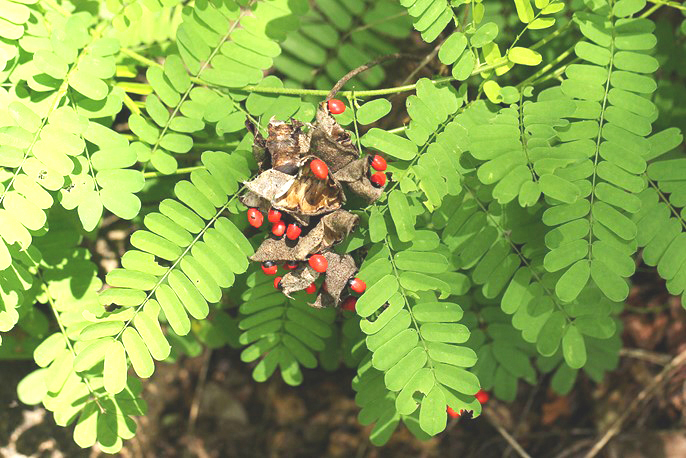
Senna leaves are mainly used as an infusion, but are also sometimes found in powder form in capsules, or compressed to make tablets. The yellowish-green « Agoè Gbé » leaves have a faint odour and a pleasant mucilaginous flavour. The husk of senna seeds contains between 2% and 5.5% anthranoids, while the leaves contain around 3%. They are dried in the sun and reduced to a powder, which is used as is or to obtain a liquid extract. Anthranoids or anthraquinones are natural derivatives in the leaves and have proven therapeutic power in treating all functional intestinal disorders such as functional colopathy, laxophobia and constipation.
According
to Sénam Bédi-Djinékou, « Agoè Gbé is a vermifuge, antibiotic, type 2
diabetes treatment, diuretic and astringent, and combats urinary tract,
bacterial and intestinal infections. When it comes to constipation, it speaks
for itself, especially as it fights intestinal and bacterial infections ».
Recognised
effectiveness
The
World Health Organisation considers senna leaves to be « an occasional
treatment for constipation ». Senna
leaves contain anthracene derivatives (sennosides A and B).These sennosides are
digested in the colon by bacteria in the intestinal flora, which release
anthraquinones. « These anthraquinones accelerate transit in two
ways: being hydrophilic, they inhibit the absorption of water contained in
digested food, so stools remain soft and do not become lumpy.Secondly, they
increase the peristaltic movements of the colon, stimulating intestinal
movement », explains Sénam Kokou Bédi-Djinékou.
In
addition to the effects of anthraquinones, the laxative effect of senna is also
due to its irritant action on the intestinal walls. « By
stimulating intestinal transit, senna effectively combats temporary
constipation and digestive problems, acting as an intestinal purgative. This
action is beneficial in cases of haemorrhoids, as soft stools are easier to
defecate than hard stools, which can be painful », says Bédi-Djinékou.
Senna leaves contain flavonoids, mucilage, essential oils and resins. The
laxative effects of senna leaves are due to anthracene glycosides which « increase
the secretion of fluids and mucus in the intestine, prevent the reabsorption of
water and electrolytes in the intestine and stimulate intestinal motility.They
soften stools without increasing their frequency », says Sénam
Bédi-Djinékou.Approximately 8 hours after intake, senna causes constipated
people to pass a stool.
How
should Senna leaves be used?
« The
recommended dose depends on the concentration of senna in sennosides, with a
maximum of 30 mg of sennosides, which usually corresponds to a dose of 1 to 2 g
of dry leaves.Reserve use for adults and children over the age of twelve, and
limit use to a short period only », says the phytotherapist.
It
is generally advisable to drink one infusion a day, usually in the evening
before going to bed.A course of senna should always be short and to the point,
never exceeding 8 days.If no effect is observed after 4 days, consult a doctor
or pharmacist immediately.
Recipe:
Heat water without boiling, then add 1 to 2 teaspoons of dried senna leaves (no
more than 2g) to infuse in the hot water for 10 minutes, then filter. You can
add a little honey to improve its flavour. For external use, make an infusion
and use the tea as a hair rinse, or soak a clean cloth in the decoction and
apply as a poultice to the hair.In all cases, senna leaves should be used
episodically and as a short course of treatment: no more than eight to ten
days.
Caution
! In addition to using senna leaves, you should adopt a healthy diet (a varied,
balanced diet and regular exercise) to avoid putting on weight after the cure.
Contraindications
Constipation
may conceal a more serious condition, so always consult a doctor before using
any medicinal plant.Senna should not be taken for more than 8 days, as it can
irritate the intestines.Senna should not be used by people suffering from
inflammation of the colon, chronic constipation or abdominal pain of unknown
origin or due to obstruction of the digestive tract (intestinal stricture,
stool blockage). « It is contraindicated in people suffering from
severe dehydration, especially if this is associated with a loss of mineral
salts.Senna should not be used by people with heart problems. Anyone taking
heart or kidney medication should consult their doctor before taking
senna.Avoid senna during pregnancy.Women who are breast-feeding should also
abstain.Consult a naturopath or herbalist », warns the specialist.
Undesirable
effects and overdose
The
undesirable effects of senna are abdominal pain and diarrhoea.Prolonged use of
senna, like all laxatives containing anthracene derivatives, may lead to
potassium loss, which may cause heart problems. Prolonged use of senna can also
lead to a risk of dependence: a regular need for the laxative is felt. Occasional
overdoses can lead to profuse diarrhoea, toxic hepatitis or heart problems
requiring immediate medical attention, particularly in the elderly. Taking
senna changes the colour of the urine to a reddish-brown.
Abel
OZIH